
Follow the Sensor Before the Storm
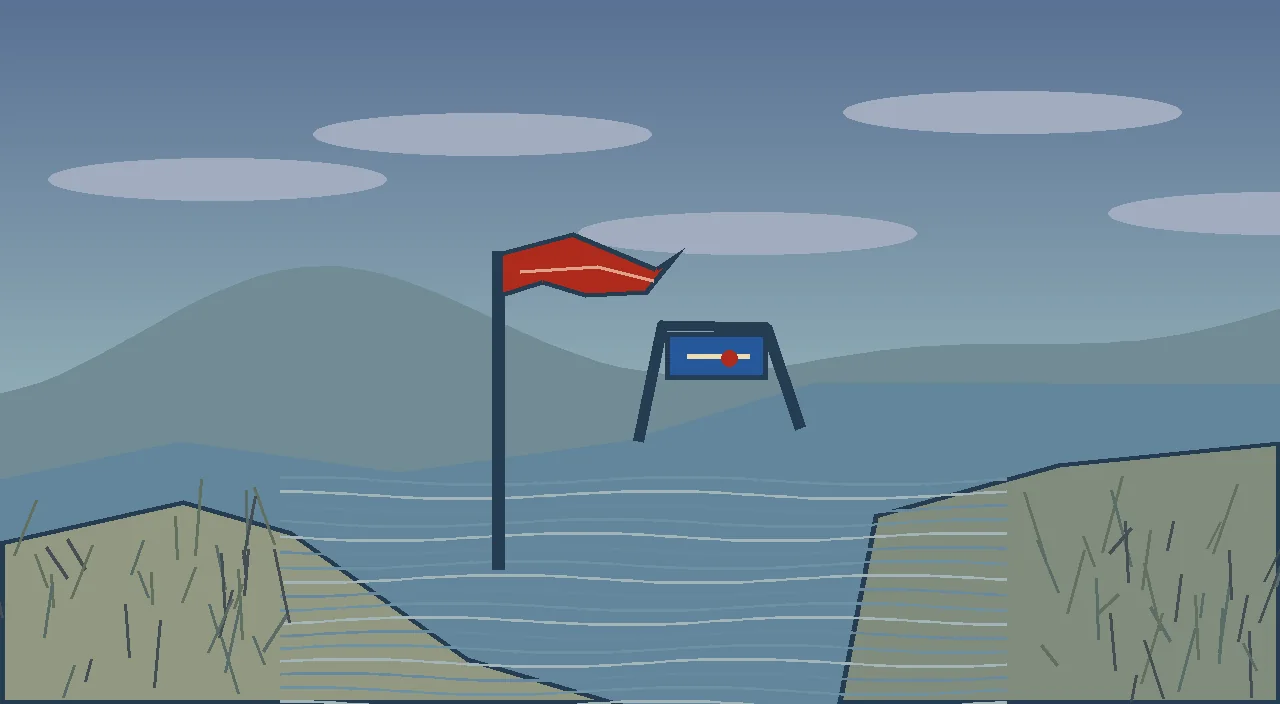
On the last plate the shutter has closed earlier. The opening drawing shows a flag moved just enough to catch the eye. Both were true in the virtual run, but the first picture did not explain the last. Looking at them together made it seem as if the flag controlled a distant wall directly. The sensor in the middle had checked at a different moment. It sent the notice in time to affect the shutter. Our proof needed a readable account of that middle part.
Give the first difference its exact subject
Set the flag to the usual cue and read the sensor at its intended time. A report can show that the flag has just begun to change when the sensor checks. If it arrives too late for the window, the next message stays on its usual schedule. Now set the flag one step earlier. Compare what the same sensor sees. It can record a usable changed state and move the following notice. Keep the two schedules near their corresponding choices. They belong to the fiction of the game, not a real observation.
The sensor check and the shutter’s response should have separate rows. Give the first a condition and readable time. The farther row can name its current state and why a notice affected it. If the player only sees the ending, another link can open the preceding reading. The whole chain then fits into a comparison once the user has found the actual cause. A printed report can keep the earlier row without adding a bright line directly from the flag to the shut wall.
Let the picture place the sensor before it explains it
The middle scene has reeds on one side and a small framework at the channel. A clear symbol identifies the point where the game read the flag. The drawing does not need the whole storm behind it. That information appears in the later illustration. Preserve the framework’s edge in a smaller preview so somebody can recognize where the middle state belongs. Its caption names the relevant game step. A wider view can show the virtual distance without making it look as if the rule follows from actual outdoor conditions.
A short article can place the earlier flag and sensor side by side. Give each its own title and retain the original shutter drawing farther down. Someone using a narrow screen can just follow the headings. An overview can show why a painted final state looks different, but the middle event is what makes its recorded change understandable. A static view does not need to repeat a moving flag to report its earlier timing.
Compare one fixed look with two outcomes
Open A Tick at Finch Gate. Choose the ordinary timing and follow the sensor result before opening the shutter. Then place the signal one step earlier. Ask which recorded reading changed and why the shutter had a different result. If somebody mentions only the flag picture, let them find the middle state explicitly. The player can still compare drawings without reading a table of every part of the virtual world. Give the useful row enough prominence before introducing more landmarks.
A second study holds the sensor result unchanged and moves the flag just outside its useful window. The result can then have an earlier movement without a new shutter outcome. The contrast establishes that both details matter. Save one proof of each. A later article can look at the first input again so long as it refers to the actual sensor window and not a shortcut the image implied.
A Delay Is Still Part of the Chain preserves a pending response in the bell study. Here the sensor reads a changed condition before a notice travels. The chosen test gives each of those facts a place beside its own image. When the shutter finally appears, the reader still has a straightforward way to see what happened after the flag and before the distant result.